
FRFP
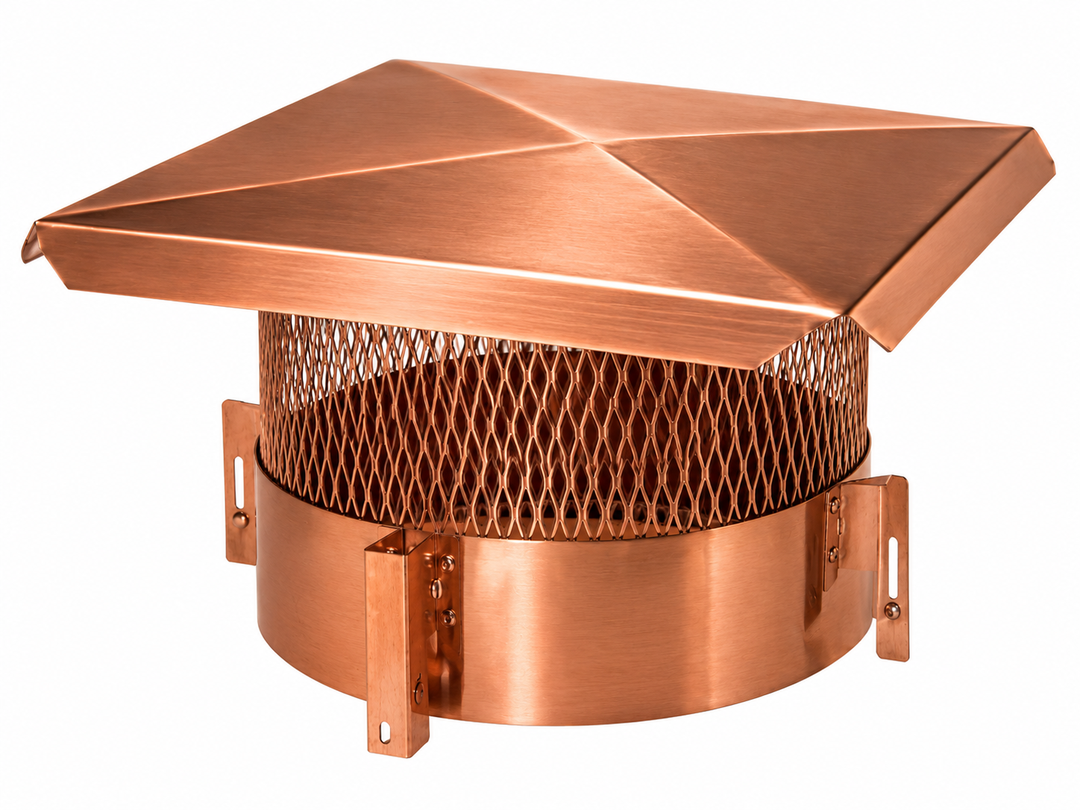
A chimney cap is the least expensive part of a chimney and the one that prevents the most expensive problems: water in the flue, birds and raccoons in the chimney, sparks on the roof and downdrafts in the living room. Choosing the right one comes down to three things — how many flues you have and how they sit on the crown, the exact size of the flue tile, and the material. This guide covers all three so you can order a chimney cap that fits the first time.
Look at the top of the chimney (binoculars from the yard work fine). On a masonry chimney you will see the concrete crown and, rising out of it, one or more clay flue tiles.
Single-flue caps are sold by flue tile size, so measure the outside length and width of the clay tile, in inches. Clay tiles come in standard nominal sizes — 8×8, 8×13, 13×13, 13×18, 18×18 — but the actual outside dimensions vary by manufacturer by half an inch or so, which is why caps are made to fit a range. A 13×13 cap, for example, fits tiles from roughly 12.5 to 13.5 inches. Round flues are measured by outside diameter.
Also note how much of the tile is exposed above the crown. A clamp-on cap needs about 4 to 5 inches to grip. If there is less, you can use crown-mount leg adapters that let a standard cap stand on the crown, or move to a multi-flue style.
For a multi-flue cap, measure the outside length and width of the crown (or the area you want covered), the height of the tallest tile above the crown, and sketch where each flue sits. The cap’s lid should sit at least 5 inches above the tallest tile so draft is not restricted.
Mesh size. Most caps use 3/4-inch mesh, which blocks birds, squirrels and large embers while letting the chimney breathe. Some areas — California is the well-known example — require 5/8-inch spark-arrestor mesh. Check your local code if you are in a wildfire zone.
Height and draft. A correctly sized cap does not hurt draft. If the fireplace already smokes, a taller cap or a draft-increasing design can help, but have the chimney inspected first: a short chimney, a blockage or a flue that is too large for the appliance are the usual causes.
Top-sealing dampers. If the throat damper in the fireplace is rusted or missing, a top-sealing damper replaces it with a gasketed lid at the top of the flue, operated by a cable in the firebox. It doubles as a cap and keeps conditioned air in the house when the fireplace is not in use.
Chimney pots. On a traditional masonry chimney, a clay or copper chimney pot adds height (better draft) and period style; pots take a cap or bird guard on top.
First Response Fireplace Products sells and ships chimney caps; installation is by your chimney sweep, roofer or yourself if you are comfortable working safely on the roof. A single-flue cap installs in minutes: slide it over the tile and tighten the clamp screws. A multi-flue cap is set on the crown, drilled and anchored with masonry screws, and sealed along the base.
Stock single-flue caps ship free on orders over $99 within the continental US. Custom multi-flue caps and shrouds are fabricated to your measurements — enter them on the product page and request a quote; no payment is taken until you approve the price and lead time. If you would rather talk it through, call (540) 212-9374, Monday to Friday 9–5 Eastern, and a fireplace specialist will confirm the size before you order.
Do I need a chimney cap at all?
Yes. An open flue lets rain into the smoke chamber and firebox, invites animals, and can let embers out onto the roof. A cap is the cheapest insurance a chimney can have.
Can a chimney cap cause a fireplace to smoke?
Only if it is too small for the flue, badly clogged or sits too low over the tile. A correctly sized cap with clean mesh does not affect draft.
How often should the cap be cleaned?
Have the mesh checked whenever the chimney is swept. Creosote and soot can bridge small mesh over a heavy burning season, which is one reason 3/4-inch mesh is standard outside wildfire areas.
Can I put a cap on a gas fireplace vent?
Gas and pellet appliances use a termination cap specified by the appliance manufacturer. Use the listed cap for that venting system rather than a masonry chimney cap.
© 2026 First Response Fireplace Products, All rights reserved
Before you go
Join the list for buying guides, new arrivals and seasonal specials from an authorized dealer for every brand we carry — shipped free from the manufacturer with the full factory warranty.
Please enter a valid email address.
No spam. Unsubscribe any time.
Prefer to talk it through? Call (540) 212-9374 · Mon–Fri 9–5 ET for a free fit check.
