
FRFP



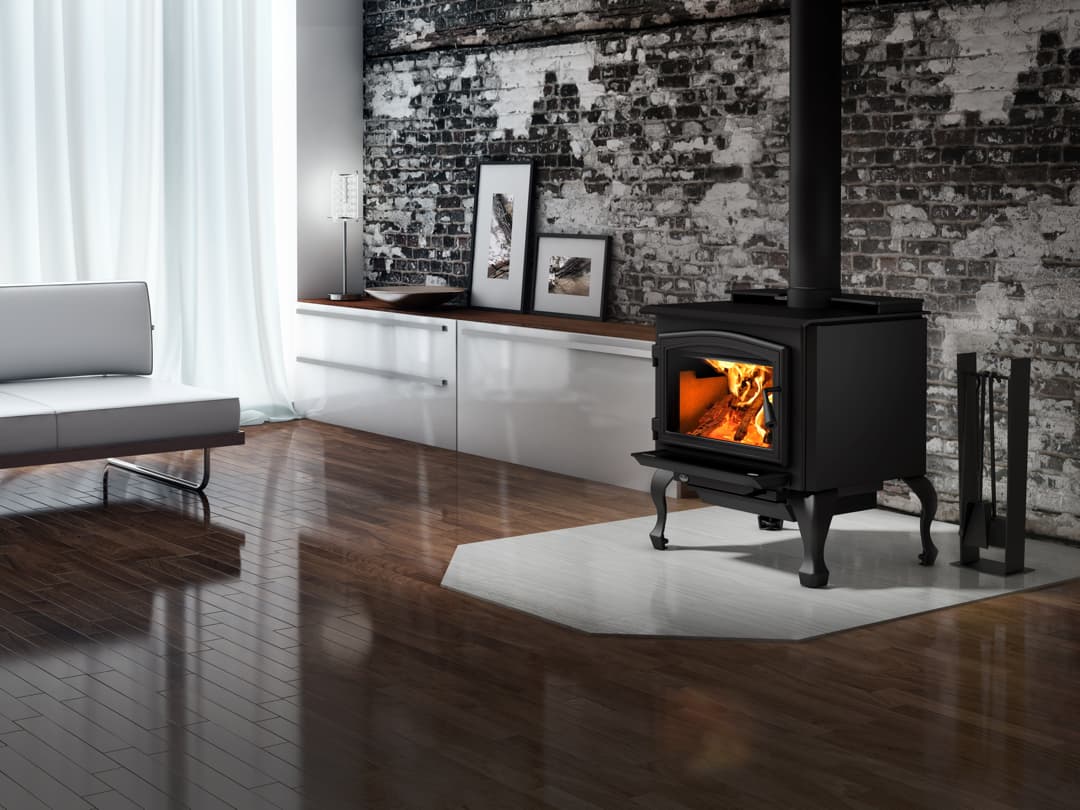

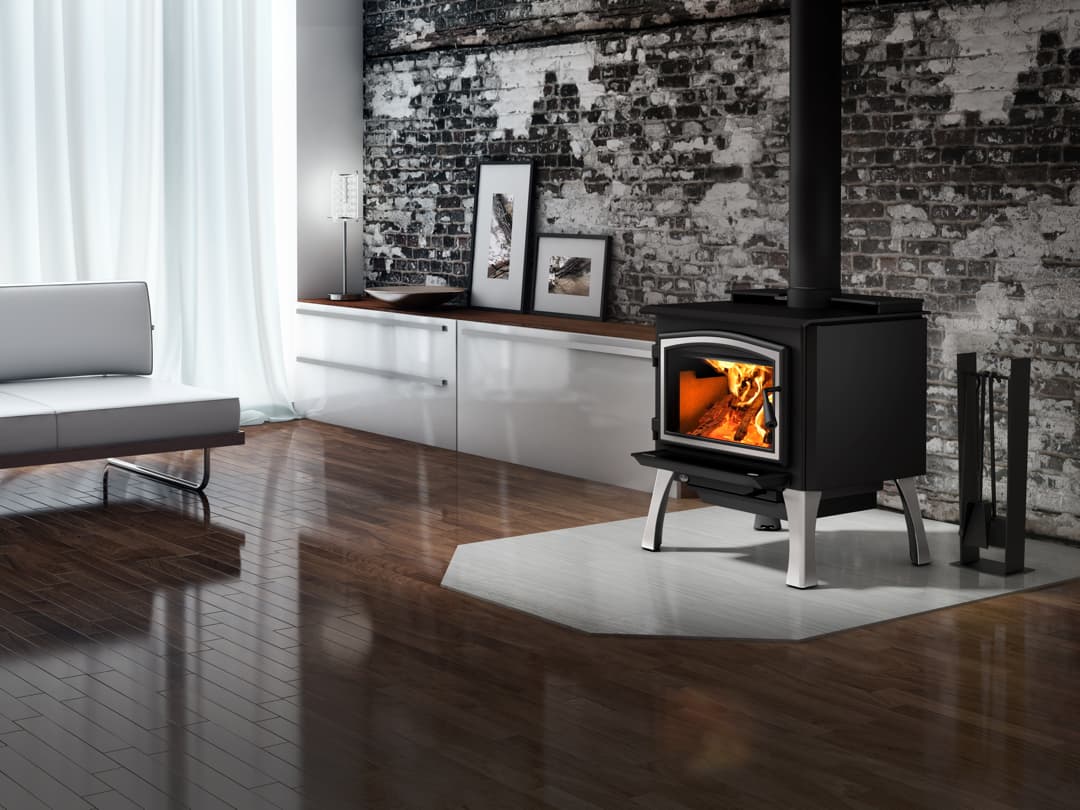
Item #: OB02015
SKU:
Starting at:
$2,899.00
| Data expressed in inches. 1 inch = 25.4 mm (Single Wall Pipe / Double Wall Pipe) | Single Wall Pipe | Double Wall Pipe |
|---|---|---|
| Clearance – Back Wall | 11" | 6" |
| Clearance - Corner | 10" | 7" |
| Clearance - Side Wall | 16" | 16" |
| Clearance - Top (Measured From the Platform on Which the Appliance Is Installed) | 84" | 84" |
Q: Can I remove the legs or pedestal of my stove and convert it into a fireplace insert?
A: Unfortunately, there is a major design difference between a freestanding wood stove and a wood insert. The wood insert (like all other inserts) has an extra steel jacket that covers about 2/3 of its firebox on the sides and all of its back. This serves to accumulate the heat radiated by the firebox. The heat is then pushed in front of the unit and into the room by a blower. Without this feature, the heat radiated by the insert would be lost into the masonry cavity. Hence, a stove inserted into a masonry fireplace would not have the same efficiency. Furthermore, its clearances to combustible materials could vary. If the stove has not been tested for this type of installation, it cannot be inserted into a masonry opening.
Q: Can I vent my heater using an existing masonry chimney?
A: It is possible to install a heater using your existing masonry chimney. The chimney must comply with the building code of your country, state or province. It usually needs to be lined with refractory bricks, metal, or clay tiles sealed together with fire cement. The diameter of the chimney must be the same as the appliance's flue outlet. If your masonry chimney does not have the same diameter as the appliance's flue outlet, you need to insert a stainless steel liner having the proper diameter. Otherwise, you may face draft problems. There are two types of liners: rigid and flexible liner. Both types are made of stainless steel. They must be certified for venting solid-fuel burning appliances. Flexible liner is particularly useful when the masonry chimney has one or more deviations.
Q: Can I cook on the top of my wood stove?
A: It is definitely possible to cook on the top of your stove. This can be very useful in case of power failure. A stove fully loaded with wood will easily reach 500 to 700 °F on top. This is sufficient to cook. The use of a pan or other cookware may scratch the paint. An option is to use a cast iron cooking grid or simply lay a piece of stainless steel on top of the stove.
Q: Can I Cancel or Modify My Order?
A: For ready-to-ship items, contact us immediately if you need to cancel or modify. We'll do our best to accommodate if the order hasn't shipped yet. For custom-made, made-to-order, and special order items, these are final sale and cannot be canceled or modified once production begins or the order is submitted to the manufacturer. Please double-check your order details before completing your purchase.
Q: Why Choose First Response Fireplace Products?
A: We bring years of specialized expertise to the fireplace industry. When you choose us, you're getting the knowledge and experience that comes from being dedicated fireplace industry experts.
© 2026 First Response Fireplace Products, All rights reserved
