
FRFP
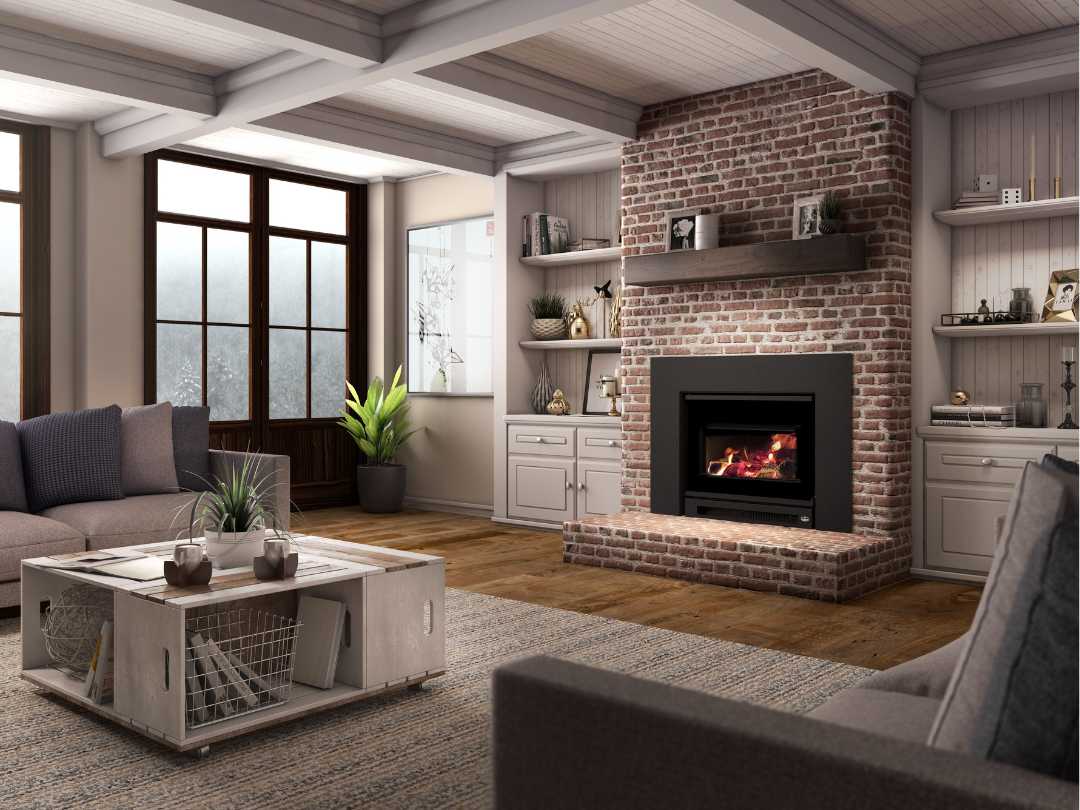
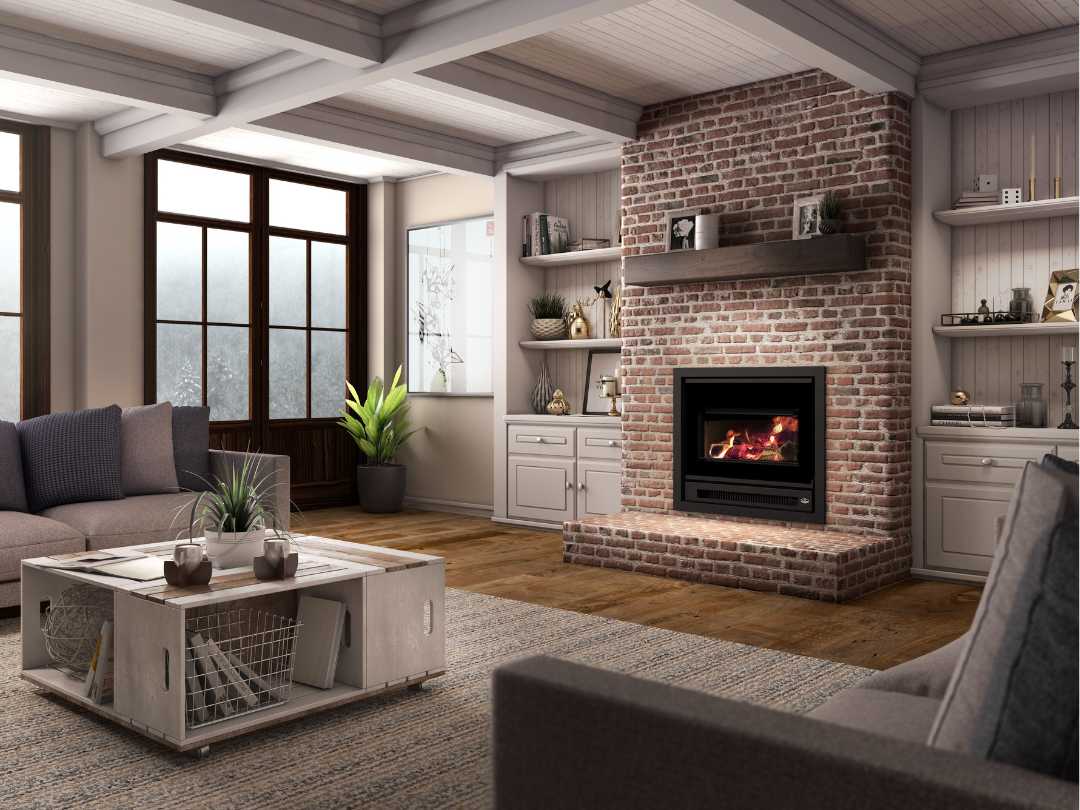
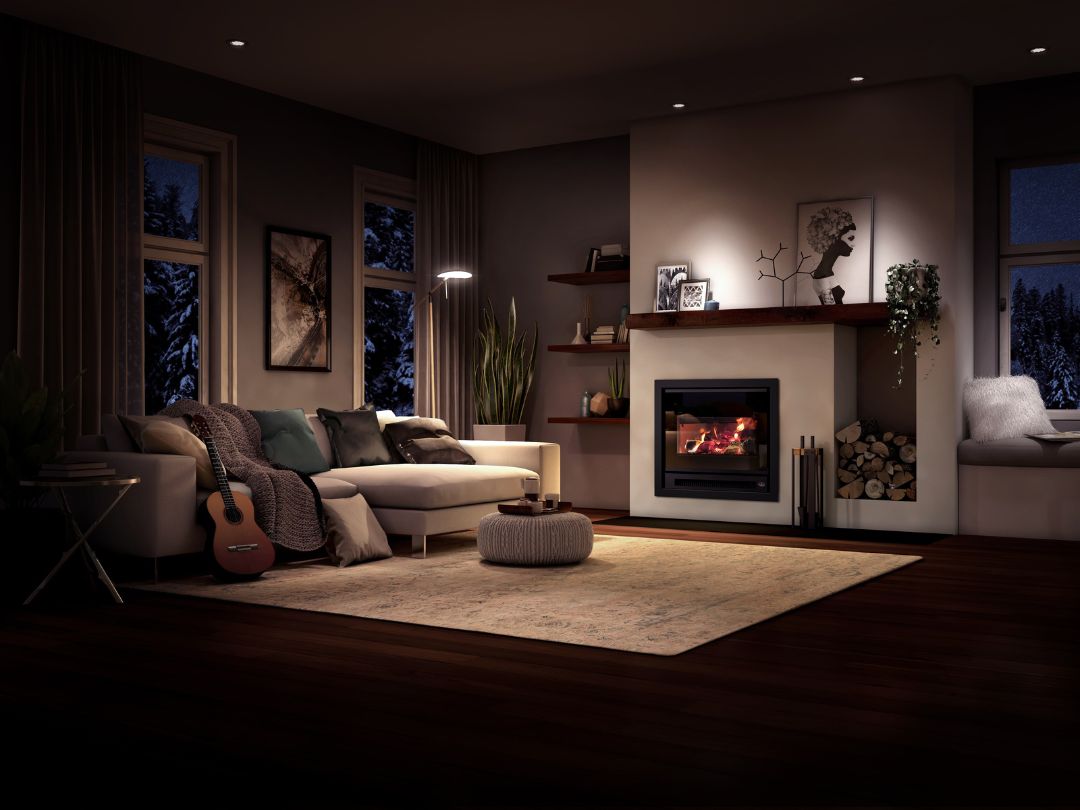
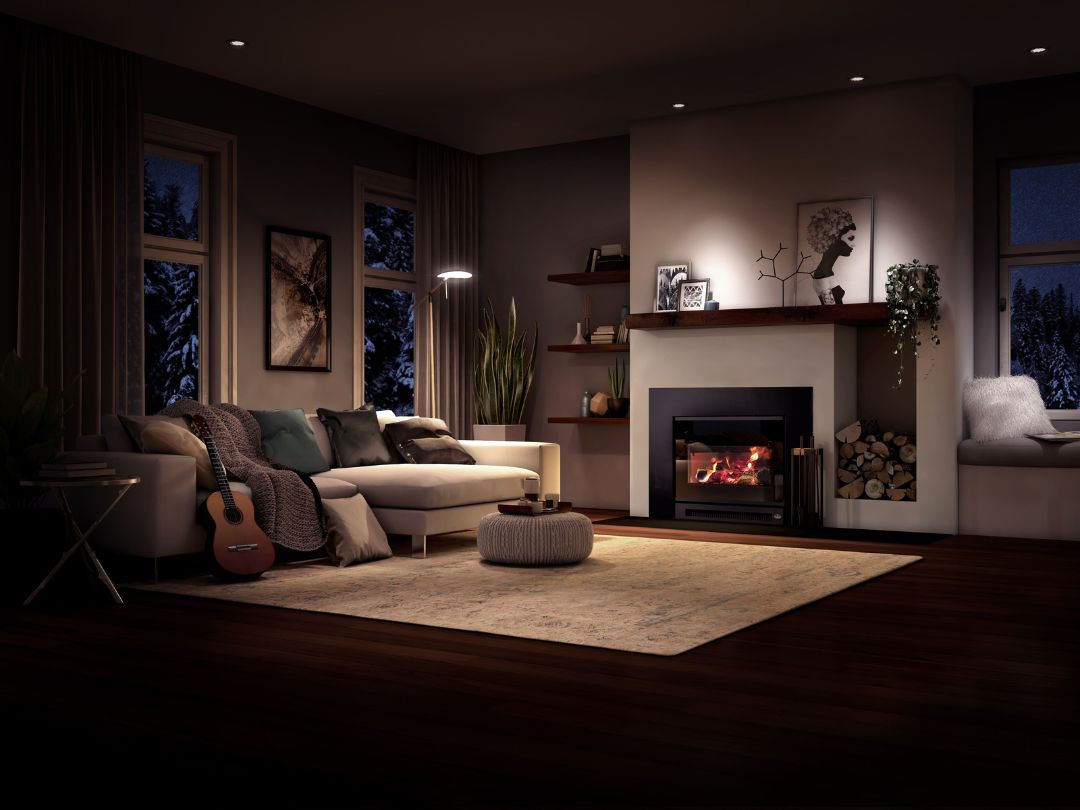
Item #: OB02045
SKU:
Starting at:
$3,499.00
Most wood inserts assume you have a deep masonry firebox. Plenty of houses do not — particularly newer builds and prefab fireplaces, where the box is shallow and the bigger units simply will not go back far enough.
The Inspire 2000-I is 20⅞" deep and 28½" wide, which is meaningfully smaller than the 3500-I at 29" deep. It also needs only 12 ft of chimney rather than 15, so it works on shorter stacks — single-storey homes and ranch layouts where taller inserts cannot develop draft.
If a dealer has told you your fireplace is too small for an insert, this is the one to measure against before you give up.
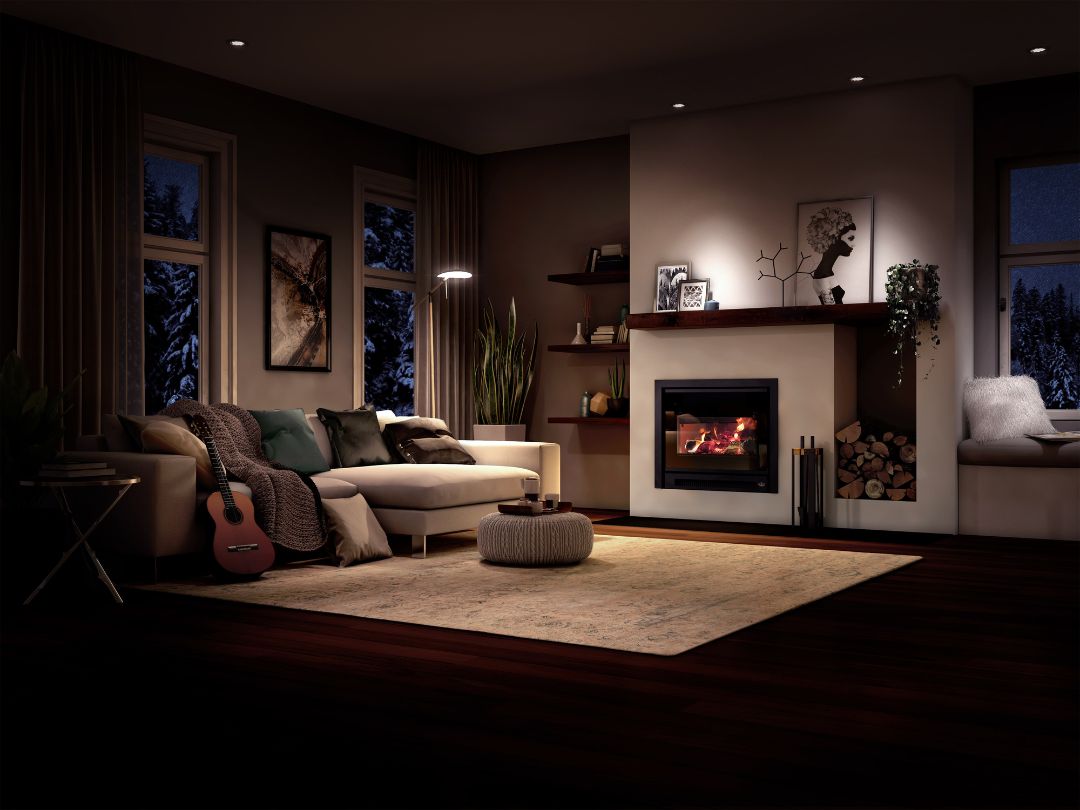
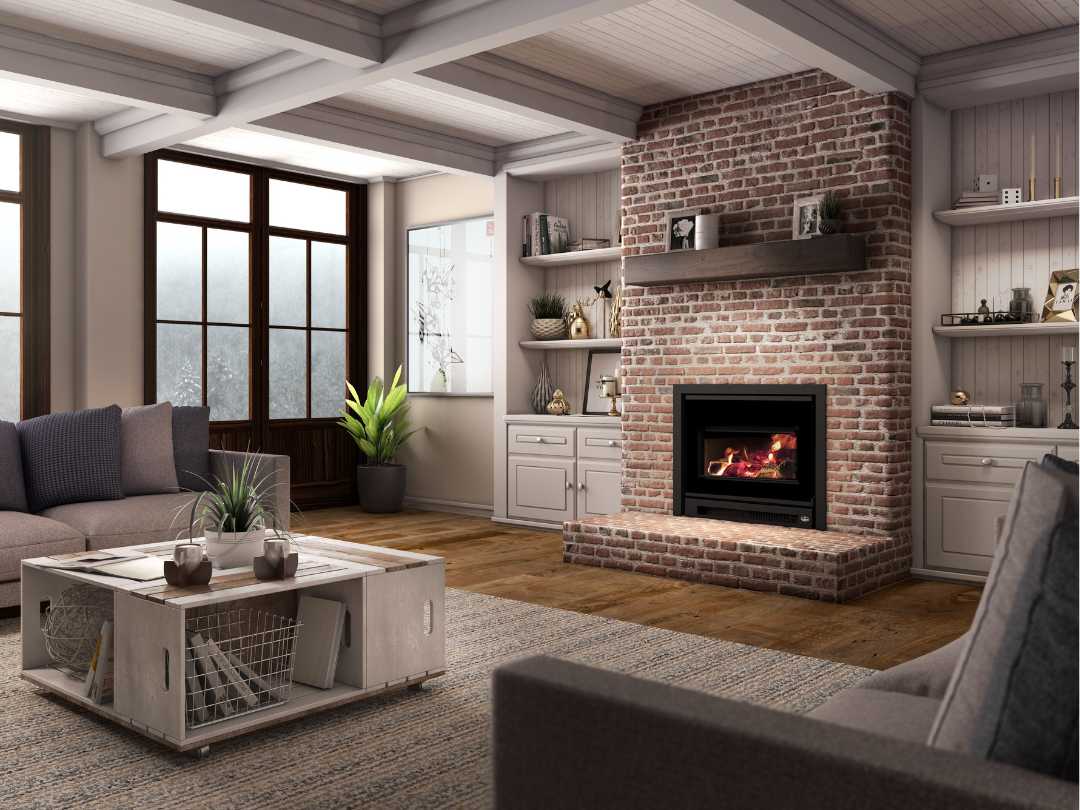
Where the rest of the Osburn range leans traditional with cast iron faceplates, the Inspire runs clean and rectilinear with a steel-framed door and squared lines. In a contemporary room the cast iron units can look bolted-on; this one does not.
The trade for the compact footprint is emissions: 2.3 g/h, against 1.2 for the Matrix 2700. Still EPA approved and still far cleaner than any pre-2000 stove, but it is the least clean of the Osburn inserts and we would rather say so. If your priority is the lowest possible creosote load and your fireplace can take it, the Matrix 2700 burns cleaner.
Non-catalytic combustion — no combustor to replace.
A continuous stainless liner running the full chimney height is required — listed to ULC-S635, CAN/ULC-S640 or UL1777, minimum 12 ft. Budget it with the appliance.
Measure your firebox depth at the floor and send us the number. If anything fits, this will — (540) 212-9374.
| Data expressed in inches. 1 inch = 25.4 mm (Single Wall Pipe / Double Wall Pipe) | Single Wall Pipe | Double Wall Pipe |
|---|---|---|
| Clearance - Side Wall | 16" | – |
| Clearance - Top (Measured From the Platform on Which the Appliance Is Installed) | 84" | – |
| Clearance – Minimum Floor Protection in Front of the Appliance | 16" | – |
Q: Why is the efficiency as per the EPA’s test data smaller than the publicized optimum efficiency?
A: EPA refers to the CSAB415.1-10 standard for the calculation of the appliance’s efficiency. The efficiency reported as per EPA’s directives consists of an average between four different burn rates, ranging from the lowest burn rate (air intake completely closed) to the highest burn rate (air intake completely open). The optimum efficiency that we publicize is the efficiency obtained according to the same test data, but for the low burn rate only. This efficiency is more realistic for a majority of users whose heating needs require that the unit be used to maximize burn times.
Q: Why is the BTU according to EPA test data smaller than the one advertised?
A: You will notice a difference between the BTU output as per the EPA’s test data and what is advertised on our web site and/or product literature. The maximum BTU output we advertise is what will be obtained with a full load of seasoned cordwood inserted inside the firebox. The EPA output, on the other hand, is what has been obtained during emissions testing. The EPA test procedure requires that a special type of wood is used and positioned inside the firebox in a manner that does not represent the way the firebox volume would normally be utilized using seasoned cordwood. The EPA test load is typically much smaller. Hence, the BTU as per the EPA’s test data is reduced. The BTU output that should be considered by a normal user is the one we advertise for seasoned cordwood.
Q: Will my insert work in the case of a power failure?
A: Your insert can be used in a power failure. An insert is built like a wood stove. The only thing that will not work in a power failure is the blower. Operating your insert without the blower will not damage the unit. The disadvantage is that you will not benefit from the heat circulation around the insert’s jacket. Inserts come with a blower because a large portion of the unit is inserted into a masonry opening. The heat that radiates from the portion of the firebox inserted into the masonry hearth does not reach the room as it would with a freestanding wood stove. This is why inserts have a jacket built around the back portion of their firebox. The heat is trapped inside that jacket and is pushed back in front of the stove and into the room with a blower. Without electricity, you will not recover as much heat from the unit. The radiating heat will come mainly from the glass and the front portion of the insert.
Q: Why does my wood insert blower not move a lot of air?
A: All of our inserts and blowers are designed to complement each other. It is a matter of achieving the greatest amount of heat transfer from the unit. The key is to design the insert so air can move and extract the greatest amount of heat without cooling the firebox and hindering the efficiency of the unit. If the blower velocity were to be increased, it would give the impression that the unit heats more. However, it would actually blow cooler air and reduce the unit's efficiency. A hot firebox will burn better and cleaner. A slower but hotter air displacement is therefore always preferable. The same principle applies to the heat sensor available on many models. It is better for the heat sensor to activate the blower later, when the unit is very hot, rather than activating it too early and blow cooler air when the unit is still completing its start-up phase.
Q: Can I install a liner with a 5-inch or 5.5-inch diameter?
A: All of our inserts are designed to function with a 6" liner. However, it is adequate to install a 5" or 5.5" liner when the masonry chimney is too tight for a 6" liner. Under certain conditions, the probability of a drafting issue is increased, which could favor smoke spillage and/or reduce combustion quality. But generally speaking, the vast majority of homeowners who properly install a 5" or 5.5" liner and use good heating techniques will be very satisfied with the performance of their wood insert.
© 2026 First Response Fireplace Products, All rights reserved
